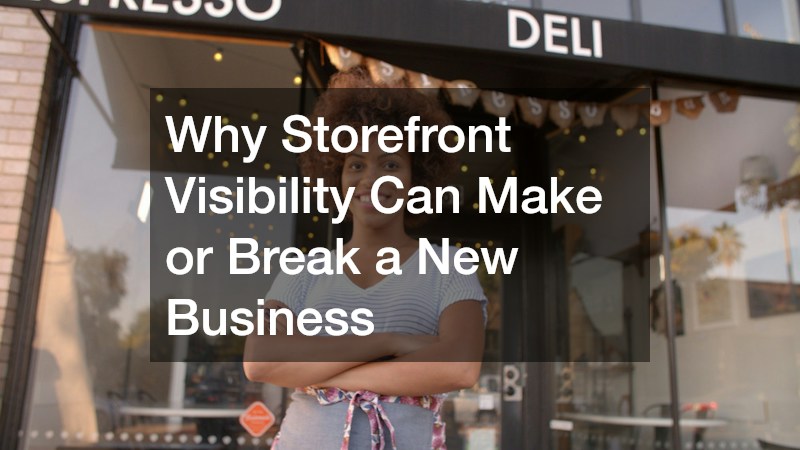


Opening a new business is exciting, but even the best products or services can go unnoticed if customers can’t find your location or don’t register it as they drive by. Many first-time business owners pour their budget into inventory, staffing, and marketing campaigns while overlooking the physical presence of their storefront. The truth is, your storefront is often the very first impression a potential customer forms about your business, and that impression happens in seconds. This article breaks down why visibility matters so much in those early, critical months and what you can do to make sure your business gets noticed.
First Impressions Happen Within Seconds
Research on consumer behavior consistently shows that people form judgments about a business almost instantly, often before they ever step through the door. A storefront that is hard to see, poorly lit, or visually cluttered sends an unintentional message that the business inside might be disorganized or struggling. On the other hand, a clean, well-marked entrance signals professionalism and makes people feel comfortable walking in. New businesses rarely get a second chance to correct a bad first impression, which makes this initial moment worth investing in early.
Think about the last time you passed a storefront that caught your eye versus one that blended into the background. Chances are the one you remember had something distinct about it, whether that was color, lighting, or clear signage. Consumers are bombarded with visual information constantly, so anything that helps your business stand out from the noise works in your favor.
Foot Traffic Depends on Clear Street Presence
For any business relying on walk-in customers, visibility from the street or sidewalk is not optional, it is foundational. A storefront tucked behind trees, poorly placed in a strip mall, or lacking clear identification can lose potential customers simply because they never realized the business was there. This is especially true for new businesses that have not yet built name recognition in the community. People are far more likely to try a new place if they can clearly see what it is and where the entrance is located.
- Position any exterior signage at eye level and ensure it is unobstructed by trees, poles, or other structures
- Use contrasting colors so your storefront doesn’t blend into neighboring buildings
- Keep windows clean and unobstructed so passersby can see activity inside
- Add directional elements like arrows or pathway lighting if your entrance isn’t obvious from the street
Signage Choices Influence Brand Perception
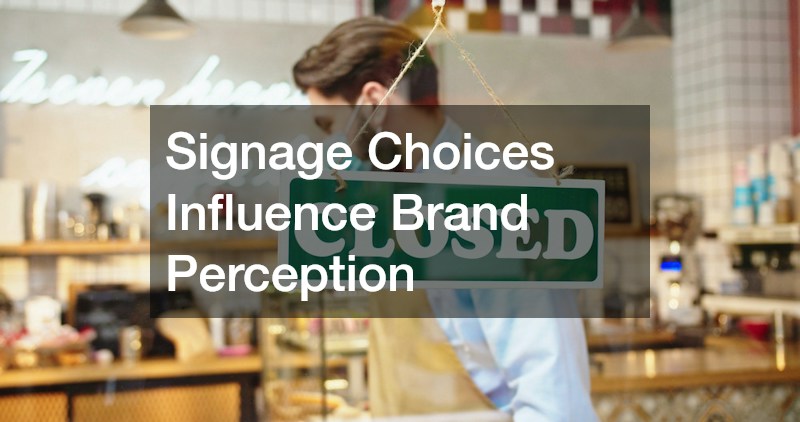
The type, quality, and condition of your signage communicates a lot about your business before a customer ever interacts with staff or products. A faded, cracked, or outdated sign can make even a brand-new business look like it has been struggling for years, while a crisp, well-lit sign suggests stability and attention to detail. Font choice, color contrast, and material all play a role too — a thin, flimsy plastic sign reads very differently than one made of brushed metal, wood, or quality acrylic, even if the design itself is similar. Many new business owners underestimate how much thought should go into this decision and end up choosing something generic just to save time or money. Others go the opposite direction, picking something flashy or trend-driven that clashes with the rest of their branding or quickly looks dated. Neither extreme does much to build trust with people walking or driving by for the first time. It also helps to think about visibility in practical terms: lettering that’s too small to read from the street, colors that don’t stand out against the building’s facade, or lighting that washes out at night can all undercut an otherwise solid design. Working with established sign companies can help ensure the finished product matches the quality and tone you want your brand to project, rather than looking like an afterthought. These professionals can also advise on local permitting requirements and durability standards suited to your climate, which a DIY approach often overlooks entirely.
Beyond aesthetics, signage also needs to be practical. It should be legible from a reasonable distance—typically, letters need about one inch of height for every ten feet of viewing distance—and appropriately sized for the building without overwhelming the facade. Most municipalities also regulate dimensions, placement, and even illumination type, so it’s worth checking with the local planning or zoning office before ordering anything, since permit delays can push back an opening by weeks. Lighting matters just as much as size. A sign that looks great during the day but disappears at night only solves half the problem, especially for businesses that rely on evening foot traffic like restaurants, bars, or salons. Backlit channel letters, halo lighting, and simple floodlights each create a different impression, so the choice should match the brand tone rather than just whatever is cheapest or most available. Material choice is another practical factor that affects both appearance and longevity. Metal and acrylic signs tend to hold up better in harsh weather than wood or vinyl banners, which matters if the storefront faces direct sun, coastal air, or heavy snow. Taking the time to get this right early on saves money down the line, since redoing signage after a weak launch—reprinting, remounting, reapplying for permits—is almost always more expensive than doing it properly the first time.
Nighttime Visibility Affects Evening Sales
A surprising number of new business owners focus entirely on how their storefront looks during business hours and forget to consider what happens after dark. If your hours extend into the evening, or if customers pass by your location at night even when you’re closed, your visibility after sunset matters just as much as it does during the day. Poor lighting can make a storefront look closed, abandoned, or even unsafe, which discourages people from approaching.
Illuminated signage, well-lit entryways, and exterior lighting that highlights architectural features can all contribute to a storefront that reads as open and welcoming at any hour. This is particularly important for businesses in areas with significant evening foot traffic, such as entertainment districts or mixed-use neighborhoods. A well-lit storefront also contributes to a sense of safety, which subtly encourages customers to stop in rather than keep walking.
- Install exterior lighting that highlights your entrance and signage after dark
- Consider motion-activated lights for energy efficiency during slower hours
- Test how your storefront looks at night from a driver’s and pedestrian’s perspective
- Replace burnt-out bulbs promptly, since inconsistent lighting looks neglected
Local Visibility Builds Community Trust
Beyond the physical storefront, visibility also plays a role in how a new business becomes known within its local community. Being present at local events, appearing in community directories, and maintaining a consistent presence both online and offline all reinforce the sense that a business is established and trustworthy. New businesses that seem to appear and disappear, or that are hard to pin down physically, often struggle to build the kind of loyal customer base that sustains long-term growth. Consistency between your physical location and your online presence, including matching hours, addresses, and branding, helps customers feel confident that what they see is reliable and real.
Storefront visibility is not a minor detail to handle after the bigger decisions are made, it is one of the foundational elements that determines whether a new business gets the chance to prove itself. From street-level foot traffic to nighttime lighting and professional signage, every visible element either draws customers in or lets them pass by without a second glance. Take time to walk around your location at different times of day and evaluate it honestly from a stranger’s perspective. Small adjustments made early can have an outsized impact on how quickly your new business builds the recognition and trust it needs to thrive.