

When a company’s expense report includes six-figure line items for chauffeured travel or a private aircraft, it is natural to wonder whether the spending is justified or simply excessive. Whether you are a small business owner, a curious employee, or someone evaluating a company’s financial health, understanding how big-ticket business expenses are supposed to work helps you separate reasonable spending from waste or fraud. This guide breaks down the categories that most often raise eyebrows, why they exist, and what questions to ask before assuming the worst.
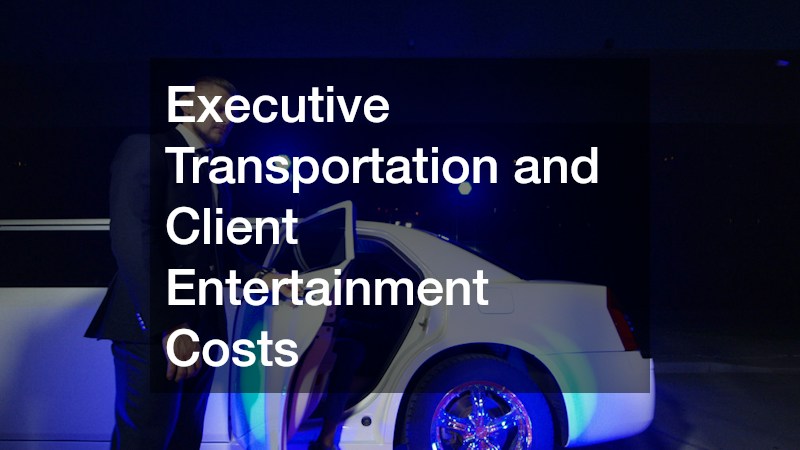
Executive Transportation and Client Entertainment Costs
Ground transportation is one of the most visible business expenses because it is easy to see and easy to question. Companies that regularly host clients, investors, or traveling executives often build transportation into their budget as a cost of doing business rather than a luxury. A well-run corporate limo service can actually save money compared to reimbursing individual mileage, parking, and time lost to unfamiliar cities, especially when multiple executives need to move between meetings on a tight schedule.
The key is whether the spending matches a legitimate business purpose and is documented accordingly. Reasonable use includes airport transfers for visiting clients, transportation to investor meetings, or moving a team between multiple sites in one day. Red flags appear when the same service is billed for personal errands, family events, or trips with no connection to company activity.
- Ask whether the trip had a documented business purpose, such as a client meeting or site visit.
- Compare the cost of chauffeured transport to standard alternatives like taxis or rideshares for the same route.
- Check whether the same vendor is used consistently, which can indicate a negotiated business rate.
- Look for matching calendar entries or meeting records that support the expense.
Corporate Aircraft and High Value Equipment Purchases
Few expenses draw more scrutiny than a company purchasing or leasing an aircraft, boat, or other large asset. These purchases are not automatically wasteful, since some businesses genuinely need to move people or cargo quickly across regions with limited commercial flight options. The real question is whether the asset is priced fairly and used often enough to justify the ongoing costs of maintenance, insurance, and staffing.
This is where independent valuation becomes important, particularly for aircraft, which carry unique risks around depreciation, mechanical condition, and regulatory compliance. Helicopter appraisals conducted by qualified specialists can reveal whether a purchase price reflects the aircraft’s true market value or includes hidden markups. Boards and auditors increasingly request these third-party valuations before approving large asset purchases, since they provide a documented, defensible number rather than relying on a seller’s asking price.
- Request a certified valuation before finalizing any major asset purchase.
- Compare the appraised value against similar recent sales in the same category.
- Review maintenance logs and inspection history for used equipment or aircraft.
- Confirm the asset’s expected usage rate justifies its ongoing carrying costs.
Expense Approval Chains and Internal Controls
Large expenses rarely become a problem because of a single bad decision. They usually slip through because approval processes are weak or inconsistently enforced. A strong system requires multiple layers of review for anything above a set dollar threshold, so no single person can approve their own high-cost spending without oversight.
Companies that handle this well tend to separate the person requesting an expense from the person approving it, and they require supporting documentation before any payment is released. This does not need to be complicated, but it does need to be consistent across departments and executive levels alike. Exceptions made for senior leadership are often where the biggest problems start.
- Require written justification for any expense above a predetermined threshold.
- Separate approval authority from the person submitting the request.
- Apply the same rules to executives as to every other employee.
- Audit a random sample of expenses each quarter rather than only reviewing flagged items.

Warning Signs That Deserve a Closer Look
Not every large expense is a problem, but certain patterns tend to correlate with misuse. Spending that spikes right before quarter end, vendors with vague or generic invoice descriptions, and expenses that are always just under the approval threshold are all common indicators worth investigating further. None of these signs prove wrongdoing on their own, but together they suggest it is time to ask more questions.
It also helps to look at consistency over time. A company that suddenly increases its use of premium travel, entertainment, or asset purchases without a clear business driver, such as new client contracts or expansion, deserves a more detailed review than one whose spending patterns have remained steady for years.
- Watch for repeated expenses that fall just under approval thresholds.
- Look for vendors billed exclusively through personal relationships with one executive.
- Notice sudden increases in spending categories without a corresponding business reason.
- Flag invoices with vague descriptions like miscellaneous services or consulting fees.
How to Verify an Expense Was Reasonable
If you are reviewing a company’s books, evaluating a potential investment, or simply trying to understand your own employer’s spending, there are practical steps you can take before drawing conclusions. Start by requesting the original invoice or receipt rather than relying on a summary line item. Original documentation often includes dates, locations, and descriptions that reveal whether the expense matches its stated purpose.
Next, compare the expense against industry norms for a company of similar size and revenue. What looks excessive in isolation may be standard practice within a particular industry, especially one that depends heavily on client relationships or time-sensitive travel. Context matters as much as the raw dollar figure.
- Pull original receipts and invoices instead of relying on expense summaries.
- Benchmark the spending against similar companies in the same industry.
- Ask what business outcome the expense was meant to support.
- Check whether the expense was pre-approved or reviewed only after the fact.
Big expenses are not inherently wasteful, but they do deserve a closer look whenever documentation is thin or the business justification is unclear. The goal is not to assume the worst about every large line item, but to ask the same practical questions a careful auditor would ask. Start by reviewing the paperwork, comparing costs to industry norms, and checking whether approval processes were actually followed before forming a final judgment.