

Your home is designed to be your ultimate sanctuary—a place of rest, security, and absolute comfort. Yet, behind the drywall and tucked away in the dark corners of the basement or attic lies a complex mechanical heartbeat that dictates the livability of your space. When these internal systems are functioning perfectly, they are entirely invisible. But when outdated, failing utility equipment begins to falter, that sanctuary can rapidly transform into a source of immense stress, physical discomfort, and severe financial drain.
Most property owners operate on a strictly reactive basis. They ignore their mechanical systems entirely until a catastrophic failure occurs in the dead of winter or during the peak of a sweltering summer heatwave. This reactive mindset inevitably leads to panicked phone calls, rushed decisions, and vastly overpriced emergency solutions. Upgrading your home’s environmental control systems should never be a hasty reaction to an emergency; it should be a deliberate, calculated investment in your property’s equity and your family’s daily well-being.
This comprehensive guide is designed to shift your perspective from reactive panic to proactive mastery. In the following sections, you will find a rigorous, step-by-step framework to audit your current utility setup, vet the right industry professionals, and strategically plan upgrades that maximize energy efficiency. By following this blueprint, you will take total control over your home’s climate and plumbing infrastructure, ensuring decades of uninterrupted comfort and significant reductions in your monthly utility costs.
Assess the Lifespan and Efficiency of Existing Units
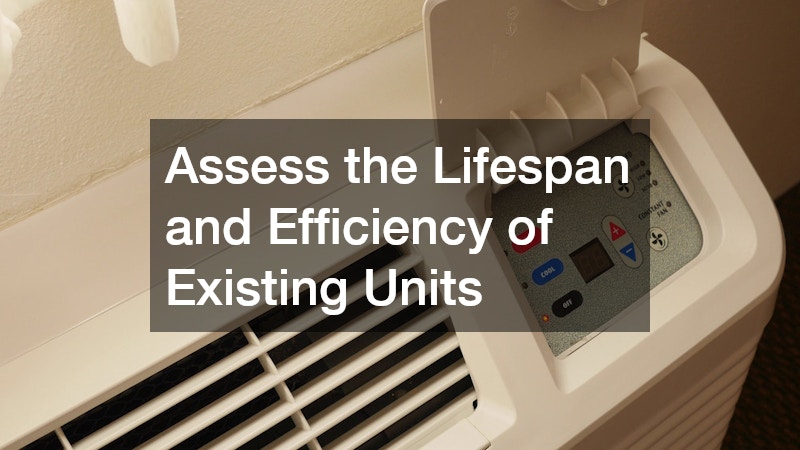
Before you can confidently plan for the future, you must thoroughly understand the current state of your home’s mechanical infrastructure. The first step in this process does not require tools; it requires your recent utility bills. Your monthly energy and gas statements are the most accurate diagnostic tools available to a homeowner.
Take an hour to gather your bills from the past two to three years and compare them month-by-month. You are looking for inexplicable spikes in energy consumption. If your daily habits have not changed, but your kilowatt-hour (kWh) usage or therms have steadily climbed by 15% to 20%, your equipment is losing its internal efficiency. As motors wear out, bearings dry up, and coils become compromised, the system must run longer and draw significantly more amperage to achieve the same temperature on the thermostat. This financial drain is often the earliest warning sign of impending failure.
Furthermore, you must honestly evaluate the reliability of your current setup. If you find yourself repeatedly searching for Local AC repairs just to survive the hottest months of the summer, your system is crying out for retirement. Constantly refilling leaked refrigerant, swapping out blown capacitors, or replacing failing blower motors is a losing financial battle.
To determine when it is time to stop patching and start replacing, industry experts recommend employing the “50% Rule.” This rule states that if the cost of your current HVAC system repairs approaches or exceeds half the value of a brand-new, highly efficient unit, it is financially irresponsible to continue fixing the old machinery.
To perform a physical audit of your current equipment, look for the following red flags:
-
Age of the Equipment: Check the manufacturer’s data plate. Most standard air conditioners and heat pumps have a functional lifespan of 10 to 15 years, while gas furnaces may last 15 to 20 years. If your equipment is approaching these milestones, failure is imminent.
-
Short-Cycling: Pay attention to how often the unit turns on and off. If it fires up for only a few minutes, shuts down, and immediately restarts, it is “short-cycling.” This causes massive wear and tear on the compressor and heat exchanger.
-
Inconsistent Temperatures: Walk through your home with a digital thermometer. A difference of more than a few degrees between rooms indicates failing blowers, severely leaky ductwork, or an improperly sized system.
-
Strange Noises and Odors: Squealing belts, grinding metal-on-metal sounds, or the smell of burning dust and ozone are all signs of critical internal friction and electrical degradation.
Vet and Select Qualified Industry Professionals

Once you have determined that an upgrade is necessary, the most crucial decision you will make is selecting the people who will perform the work. The home improvement industry is vast, and the barrier to entry for a “handyman” is alarmingly low. However, modern environmental systems are highly sophisticated, interconnected networks of high-voltage electricity, pressurized chemical refrigerants, and explosive natural gas. Allowing an unverified, underqualified worker to manipulate these systems is a profound risk to your property and your safety.
Your primary goal is to look past glossy marketing materials and heavily vetted online reviews to demand verifiable proof of technical mastery. The absolute gold standard for technical competence in this industry is certification from North American Technician Excellence (NATE). NATE is an independent, third-party non-profit organization that administers rigorous, knowledge-based testing to technicians. When you hire NATE-certified HVAC contractors, you are guaranteeing that the individual in your home has proven their deep understanding of thermodynamics, electrical schematics, and modern smart-home integration.
You must also strictly audit a company’s financial and legal protections. Before a technician crosses your threshold, you must request and receive physical copies of their liability insurance and their state licensing. Liability insurance protects your home; if a technician accidentally drops a heavy air handler through your ceiling drywall or causes a water leak that ruins your hardwood floors, their insurance covers the damages, not your homeowner’s policy. Workers’ compensation insurance is equally critical—if a technician is injured on your property and the company lacks this coverage, you could be held personally liable for their medical bills.
When building your vendor list, avoid fragmented specialists who only handle one aspect of your home. Instead, look for a robust, centralized company capable of delivering comprehensive heating and cooling services year-round. A unified team will understand the holistic nature of your home’s airflow, ensuring that a new winter system works in perfect harmony with the existing summer system and the centralized ductwork.
Use the following checklist to interview prospective installation teams:
-
Are your technicians NATE-certified, and do they receive ongoing factory training?
-
Can you provide a certificate of insurance with a minimum of $1 million in general liability coverage?
-
Will you pull all necessary municipal permits for this job, and will you be present for the city inspection?
-
Do you use subcontractors for any part of the installation, or are all workers your direct employees?
-
Can you provide a detailed, itemized written estimate that separates the cost of equipment, materials, and labor?
Plan for Comprehensive Temperature Management Upgrades
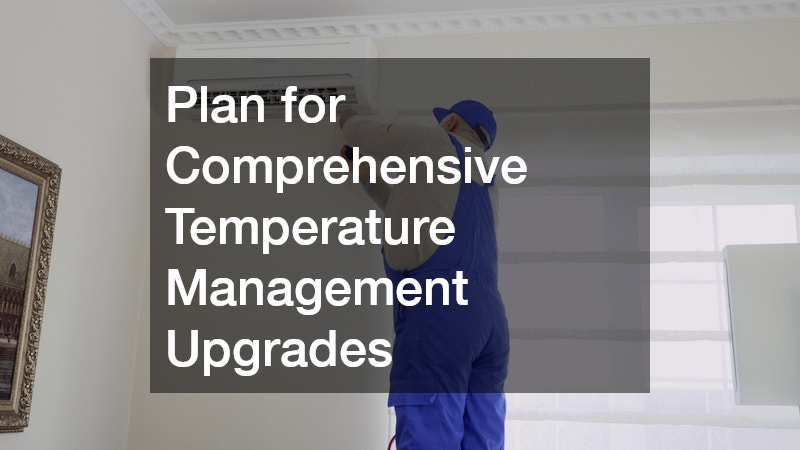
The actual process of upgrading your equipment requires far more than simply looking at the size of the old metal box and ordering a new one to match. In fact, simply swapping out equipment based on the previous unit’s specifications is a massive red flag. Homes change over time—windows are upgraded, insulation is added, and additions are built. If your new equipment is not scientifically matched to your home’s current thermal profile, you will suffer from chronic inefficiency.
The cornerstone of all successful HVAC replacements is the Manual J Load Calculation. A true professional will never guess what size equipment you need. Instead, they will spend significant time measuring your home’s exact square footage, noting the direction your home faces relative to the sun, calculating the R-value (thermal resistance) of your attic insulation, and evaluating the quality of your windows and doors. This complex mathematical formula determines the exact amount of British Thermal Units (BTUs) required to heat and cool your specific space. If a unit is oversized, it will blast the home with air, satisfying the thermostat too quickly without running long enough to pull humidity out of the air, leaving your home feeling cold and clammy. If it is undersized, it will run continuously, driving your electric bill through the roof while never reaching the desired temperature.
Beyond sizing, you must evaluate the technology you are purchasing. If you are tired of paying for frequent, mid-winter furnace repairs because your old, single-stage unit keeps breaking down, it is time to look at modulating or variable-speed technology. Older systems operate like a light switch: they are either 100% on or 100% off. This creates massive temperature swings and consumes maximum energy. Modern variable-speed compressors and modulating gas valves act like a dimmer switch. They can run at 30%, 40%, or 70% capacity, precisely matching the real-time needs of the home. This allows them to run longer, quieter, and at a fraction of the energy cost, maintaining a perfectly even temperature in every room.
Do not neglect the arteries of your home: the ductwork. You can install the most expensive, highly efficient machinery in the world, but if your ductwork is leaky, uninsulated, and poorly designed, you will lose up to 30% of your conditioned air into your attic or crawlspace before it ever reaches your living room.
When planning your climate upgrades, ensure these critical steps are taken:
-
Demand a Manual J Load Calculation in writing before agreeing to any equipment size.
-
Request a thorough ductwork inspection, including a static pressure test to ensure your system can “breathe” properly.
-
Discuss the SEER2 (Seasonal Energy Efficiency Ratio) ratings for cooling and AFUE (Annual Fuel Utilization Efficiency) ratings for heating to understand the long-term energy savings of premium models.
-
Consider upgrading to a smart thermostat ecosystem that learns your family’s schedule and optimizes energy usage while you are away or asleep.
Evaluate and Upgrade Your Domestic Water Temperature Systems

While air temperature dominates the conversation regarding home comfort, the reliability and efficiency of your domestic water supply are equally critical to your daily life. Nothing disrupts a morning routine quite like stepping into a freezing shower because the massive steel tank in your basement has finally rusted through and failed. Just like environmental systems, domestic water technology has advanced leaps and bounds, offering homeowners unprecedented efficiency and convenience.
For decades, the standard has been the 50-gallon storage tank. These tanks operate on a fundamentally flawed premise: they heat a massive volume of water to 120 degrees and then must constantly burn gas or consume electricity to keep that water hot 24 hours a day, 7 days a week, even when you are asleep or away at work. This phenomenon is known as “standby heat loss,” and it accounts for a massive portion of your home’s total energy expenditure.
When planning modern water heater installations, you have two highly superior alternatives to the traditional tank. The first is the tankless, or on-demand, system. These compact units mount directly to the wall and utilize massive gas burners or electrical elements to flash-heat water the exact moment you open a tap. Because they do not store water, standby heat loss is entirely eliminated, resulting in significant utility savings. More importantly, because they heat water continuously as it flows, you are provided with a literally endless supply of hot water—a game-changer for large families who previously had to stagger their shower schedules.
The second alternative is the hybrid heat pump system. These units look like traditional tanks, but instead of using standard electrical resistance coils, they utilize a small heat pump mounted on top of the unit. This pump pulls ambient heat from the surrounding air in your basement or garage and transfers it into the water. Because they are moving heat rather than generating it from scratch, they are up to three times more efficient than standard electric tanks.
Regardless of the technology you choose, you must protect the investment. The number one enemy of this equipment is hard water, which causes calcium and magnesium to crystallize and form sediment layers. To prevent this, you must schedule routine water heater services. A professional will flush the system annually to remove scale buildup, test the temperature and pressure relief (TPR) valve to prevent explosive pressure situations, and inspect the sacrificial anode rod—a critical internal component designed to attract corrosive elements and rust away so the steel walls of the tank do not.
Consider these factors when upgrading your domestic water system:
-
Evaluate your peak flow rate: If you plan on running two showers, a dishwasher, and a washing machine simultaneously, your contractor must calculate the necessary Gallons Per Minute (GPM) to size a tankless unit correctly.
-
Assess the infrastructure: Upgrading to a tankless gas system often requires upsizing the gas line from 1/2 inch to 3/4 inch to handle the massive, instant demand for fuel. Ensure your estimate includes this retrofitting.
-
Test your water hardness: If you live in an area with extremely hard water, consider installing a whole-home water softener in conjunction with your new equipment to protect the internal heat exchangers from rapid calcification.
Establish a Preventative Maintenance and Emergency Strategy

The process does not end once the new equipment is bolted down, the ductwork is sealed, and the final invoice is paid. Your newly upgraded home comfort systems are complex, high-performance machines. Much like a brand-new vehicle, they require strict, scheduled maintenance to retain their efficiency, ensure safety, and validate the manufacturer’s warranties. Failing to establish a maintenance strategy is a surefire way to cut the lifespan of your new investment in half.
A robust preventative maintenance plan is centered around the bi-annual tune-up. You should never wait for the system to break down to call a professional. Instead, you should proactively schedule comprehensive HVAC services in the spring, just before the intense heat of summer begins, and in the fall, right before the freezing temperatures of winter arrive.
During a proper spring tune-up, a technician will chemically clean the outdoor condenser coils, which often become choked with cottonwood, grass clippings, and dirt, severely restricting the unit’s ability to exhaust heat. They will test the microfarads on the dual-run capacitor to ensure the compressor is receiving the exact electrical voltage required to start smoothly. They will clear the indoor condensate drain line; a clogged drain line is the number one cause of water damage from indoor air handlers. During a fall tune-up, the focus shifts to combustion safety. The technician will scope the heat exchanger with a camera to look for microscopic cracks that could leak deadly carbon monoxide into your living space, clean the flame sensor, and calibrate the gas manifold pressure to ensure clean, efficient combustion.
Beyond maintaining efficiency, a formalized maintenance agreement offers critical logistical advantages. When a historic heatwave hits or a polar vortex descends, local contractors are instantly overwhelmed with thousands of desperate calls. If you do not have an established relationship with a company, you will likely be placed at the bottom of a days-long waiting list. By signing an annual maintenance contract, you are purchasing peace of mind. Most reputable companies offer priority dispatching to their contract holders, guaranteeing that if you do require unexpected HVAC repair, you skip to the front of the line. Furthermore, these contracts often waive after-hours or holiday dispatch fees and provide significant discounts on any necessary replacement parts.
To secure your investment, insist on a maintenance plan that includes:
-
Two distinct visits per year, meticulously timed before the peak heating and cooling seasons.
-
A comprehensive checklist provided after each visit, detailing the exact electrical readings, refrigerant pressures, and visual inspections performed.
-
Priority emergency scheduling that guarantees a technician at your door within 24 hours of a system failure.
-
Discounts on any parts or labor required outside of the standard tune-up scope.
-
A dedicated reminder system so the company contacts you to schedule the service, ensuring you never forget to maintain the equipment.
Conclusion
Taking control of your home’s environmental and domestic water systems is a profound responsibility, but it does not have to be an overwhelming ordeal. The key to eliminating the stress, anxiety, and financial shocks associated with home maintenance is shifting your mindset from panicked reaction to educated proactivity. Your home’s mechanical infrastructure is the foundation of your daily comfort, and it deserves to be treated as a high-priority investment.
By dedicating the time to track your utility bills, you gain invaluable insight into the hidden health of your machinery. By refusing to compromise on the credentials and technical expertise of the professionals you hire, you protect your property from dangerous, substandard workmanship. By demanding precise mathematical load calculations and exploring advanced, variable-speed and tankless technologies, you ensure that every dollar you spend is maximizing your long-term energy efficiency. And finally, by locking in a rigorous preventative maintenance schedule, you guarantee that your new systems will operate at peak performance for decades.
Do not wait for the next severe weather event to test the limits of your aging equipment. Take a proactive step today. Walk down to your utility room, check the manufacturing dates on your current units, review your recent energy bills, and begin researching certified, highly reputable professionals in your area. The ultimate comfort, safety, and financial efficiency of your sanctuary are entirely within your control.