


When snow blankets your city overnight and the roads are somehow clear by your morning commute, it feels almost like magic. In reality, that clear pavement is the result of a massive, coordinated effort involving people and systems most drivers never think about. From the engineers who design equipment to the dispatchers tracking storms in real time, dozens of roles work together behind the scenes. Understanding these jobs can help you appreciate the complexity of winter road maintenance and even make smarter decisions if you ever interact with this industry, whether as a taxpayer, a commuter, or someone considering a career in it.
Weather Forecasters Who Guide Road Crews
Long before a single plow hits the pavement, meteorologists and road weather forecasters are analyzing data to predict when and where storms will strike. These specialists often work directly with transportation departments, providing hyper-local forecasts that account for pavement temperature, humidity, and wind patterns rather than just general weather conditions. Some agencies even station forecasters inside traffic management centers so they can update crews in real time as conditions shift. To build these forecasts, they rely on a mix of tools most drivers never think about: pavement sensors embedded in roadways, mobile weather stations mounted on plow trucks, radar feeds, and satellite imagery. Road surface temperature often matters more than air temperature, since pavement can stay below freezing even when the air warms up, creating black ice long after a storm has passed. Forecasters track these subtle differences block by block, not just city by city. Their predictions determine when crews are called in, how much salt or brine gets pre-positioned, and which routes receive priority treatment. A forecast that’s off by just a degree or two, or a few hours, can mean the difference between a proactive brine application and an emergency scramble after roads have already iced over. Because of this, many departments now use predictive models that run multiple scenarios simultaneously, allowing supervisors to compare worst-case and best-case timelines before committing resources.
Road weather forecasting has become increasingly sophisticated, relying on sensors embedded in highways that transmit real-time pavement conditions back to control centers. These Road Weather Information Systems, or RWIS stations, measure surface temperature, moisture levels, and the concentration of any de-icing chemicals already on the road, often updating every few minutes. Forecasters combine this ground-level data with atmospheric models to predict not just when precipitation will fall, but what form it will take and how the pavement itself will react. A road surface can stay above freezing even when the air temperature drops below it, or vice versa, so meteorologists track bridges and overpasses separately since they cool faster than open roadway. This data helps agencies decide whether to pretreat roads hours before a storm arrives, which can prevent ice from bonding to the surface in the first place. Timing matters enormously here: brine applied too early can wash away with rain, while treatment applied too late may not have time to work before traffic compacts falling snow into ice. Many state transportation departments now employ dedicated meteorologists or contract with private forecasting firms that specialize in winter maintenance, feeding hour-by-hour storm timelines directly to plow dispatchers so crews can be positioned before the first flakes fall.
- Pavement sensors embedded in roadways measure surface temperature, moisture, and salinity in real time
- Forecasters track dew point and ground temperature trends to predict black ice formation hours before it appears
- Forecasters coordinate with dispatch centers to time crew deployment, often calling in shifts 6-12 hours ahead of a storm
- Weather models help predict snowfall rates and accumulation timing, factoring in wind speed and drift patterns
- Road weather information systems (RWIS) combine radar data with ground sensors for hyper-local forecasts by route segment
- Data informs decisions about brine application before storms hit, since pre-treating too early can wash away effectiveness
- Forecasters reassess conditions every few hours, adjusting plans as temperatures or precipitation rates shift mid-storm
Equipment Operators Who Clear the Streets
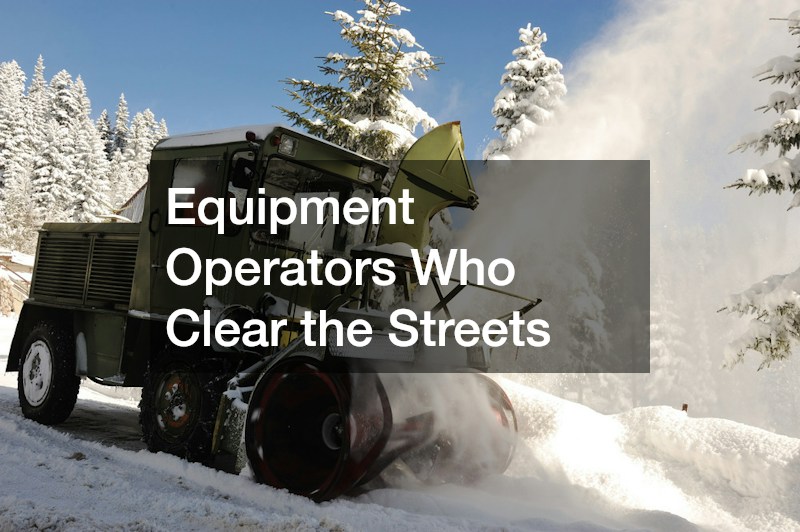
The most visible job in winter road maintenance belongs to the plow drivers who spend long shifts navigating treacherous conditions. These operators need specialized training to handle heavy vehicles safely, often working twelve-hour shifts during major storms with little rest in between. Beyond driving skill, they must understand how to angle blades correctly, manage spreader rates for salt and sand, and communicate with dispatch about road conditions they encounter firsthand.
Many operators also perform basic maintenance checks before and after their shifts, inspecting hydraulic systems and blade attachments to catch problems early. A damaged or improperly mounted blade can reduce plowing efficiency significantly, leaving streets less safe for the next shift. This is why fleet managers emphasize routine inspections as much as driving skill when training new operators.
Engineers Who Design and Build Plowing Equipment
Behind every plow truck on the road is a team of engineers who spent months, sometimes years, refining the equipment for durability and performance. Snow plow blade manufacturing involves careful material selection, since blades must withstand repeated impact with pavement, curbs, and debris without cracking or warping in freezing temperatures. Engineers test different steel alloys and polymer edges to find combinations that resist wear while still being lightweight enough to maneuver efficiently.
The manufacturing process also accounts for the variety of terrain crews encounter, from wide highways to narrow residential streets. Some blades are designed with curved moldboards that throw snow farther off the roadway, while others use reversible edges that extend the equipment’s usable life. Because winter maintenance budgets are often tight, municipalities rely on manufacturers who build equipment that can handle years of harsh use without constant replacement.
- Blade materials must resist cracking in sub-zero temperatures
- Reversible cutting edges help extend equipment lifespan
- Curved moldboards improve snow-throwing distance and efficiency
- Manufacturers test equipment under simulated impact conditions
Dispatchers Who Coordinate Fleet Movements
While plow drivers handle the physical work, dispatchers act as the nerve center of any winter road operation. They track which streets have been treated, which vehicles need fuel or repairs, and where new problem areas are developing based on driver reports and traffic camera feeds. A skilled dispatcher can reroute trucks mid-shift to address sudden ice patches or accidents, preventing small issues from becoming major hazards.
Dispatchers also serve as the communication bridge between field crews and agency leadership, relaying updates that inform public announcements about road conditions. Their work often goes unnoticed by the public, but without this coordination, even a large fleet of trucks would struggle to respond efficiently to changing conditions across a sprawling road network.
Mechanics Who Keep Fleets Running Through the Season
Winter maintenance fleets take a beating during peak storm season, and the mechanics who service these vehicles work some of the most demanding hours in the industry. Trucks often run continuously for days during extended storms, which means mechanics perform rapid repairs between shifts rather than waiting for scheduled downtime. Hydraulic leaks, worn spreader chains, and electrical issues in plow controls are common problems that need quick fixes to keep vehicles in service.
Fleet mechanics also plan ahead by stockpiling critical parts before winter begins, since supply delays during a storm can sideline multiple trucks at once. Many municipalities invest in preventive maintenance programs that catch small issues during the off-season, reducing the likelihood of breakdowns when crews need every vehicle available.
- Mechanics prioritize hydraulic and electrical repairs during active storms
- Preventive maintenance schedules reduce mid-storm breakdowns
- Parts inventories are stocked ahead of peak winter months
- Quick-turnaround repairs keep fleets operational around the clock
The next time you drive on a freshly cleared road after a snowstorm, consider the layered effort it took to get there, from forecasters and dispatchers to the engineers and mechanics supporting the fleet. Each role plays a distinct part in a system designed to keep communities moving safely through harsh conditions. If you want to learn more about how your local roads are maintained, many transportation departments publish winter operation reports that detail staffing, equipment, and response strategies.