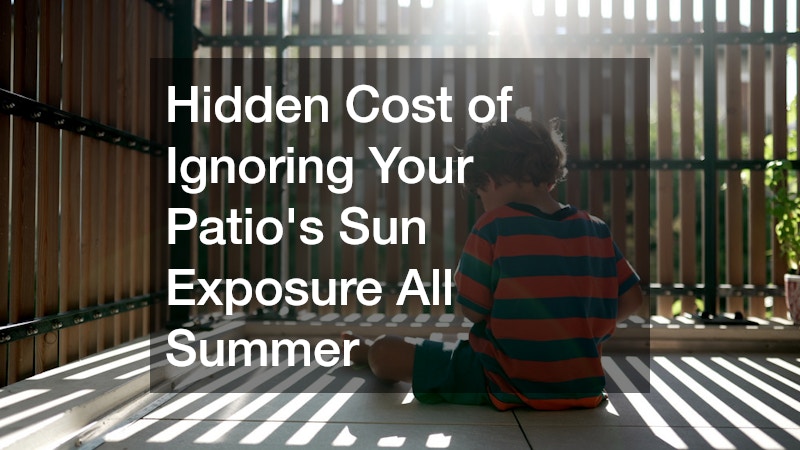


That patio you barely glanced at since June has quietly been racking up a bill you haven’t seen yet. Sun exposure doesn’t just make your outdoor space uncomfortable on hot afternoons, it accelerates wear on furniture, flooring, and fixtures in ways that are easy to miss until the damage is done. By the time summer ends, faded cushions, cracked wood, and warped materials often tell the story of months of unmanaged heat and UV rays. Understanding where the real costs hide is the first step toward protecting your investment and actually enjoying your patio next season.
Fading and Cracking in Outdoor Furniture
Direct sun exposure breaks down the fibers in outdoor fabric and the finish on wood or resin furniture far faster than most people expect. What starts as slight color loss in early June can turn into brittle, cracking material by August, especially on cushions and umbrellas that never get a break from midday sun. Replacing a full patio set is rarely cheap, and many homeowners end up repurchasing the same pieces every two or three years simply because nothing was done to reduce daily UV exposure.
The damage isn’t always obvious right away, which is part of why it gets ignored. Fabric can look fine from a distance while the underlying threads are already weakening, leading to sudden tears under normal use.
- Cushion fabric can lose noticeable color within 8 to 12 weeks of consistent full sun
- Wood furniture may dry out, splinter, or warp without regular conditioning
- Plastic and resin pieces can become brittle and crack under prolonged UV stress
- Metal frames can absorb heat and degrade paint or protective coatings faster
Heat Buildup That Makes Patios Unusable
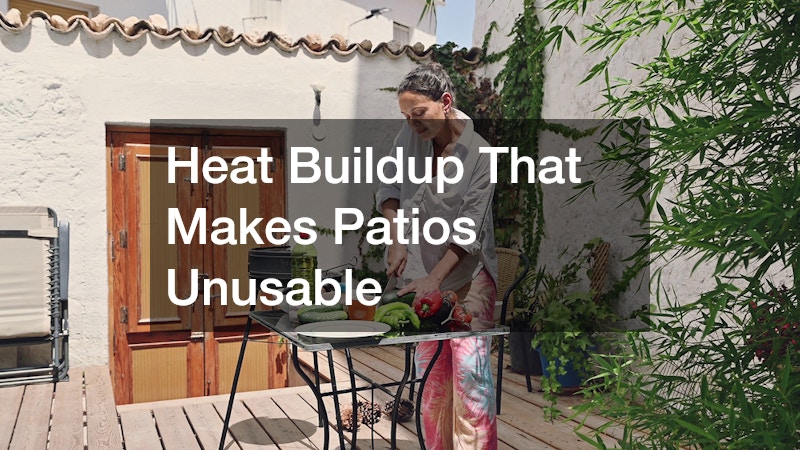
A patio that bakes in direct sun for six or more hours a day often becomes too hot to use during exactly the hours people want to be outside. Surface temperatures on stone, concrete, or composite decking can climb well above the surrounding air temperature, sometimes making bare feet or pets uncomfortable within minutes. This heat buildup doesn’t just affect comfort, it can also stress certain materials over time, leading to expansion, cracking, or discoloration that shows up gradually across a season.
Many homeowners respond by simply avoiding the space during peak sun hours, which defeats the purpose of having outdoor square footage in the first place. A patio that only gets used in the early morning or after sunset is a patio that isn’t earning its keep, and that lost use is its own quiet cost.
Energy Costs Tied to an Exposed Outdoor Living Area
An unshaded patio attached to the house can actually raise indoor cooling costs, particularly if it sits along a wall with large windows or sliding doors. Heat radiating off an exposed patio surface can transfer into adjacent rooms, forcing air conditioning systems to work harder throughout the afternoon and evening. Over a full summer, this added strain shows up as a measurable bump in utility bills that many homeowners never trace back to their outdoor space.
One practical fix gaining popularity is installing motorized outdoor shades along the patio’s most exposed side, since they can be adjusted throughout the day without manual effort. Unlike fixed awnings, motorized outdoor shades let homeowners respond to changing sun angles in real time, blocking heat during peak hours while still allowing airflow and natural light when it’s wanted. This kind of adjustable shading can meaningfully reduce the indoor temperature swing caused by an exposed patio, especially in homes with large glass doors facing the sun.
Fixture and Surface Damage From Prolonged UV and Heat
Outdoor kitchens, built-in seating, and countertop surfaces take a beating from sustained sun exposure that many homeowners underestimate when planning their patio. Certain materials handle heat and UV far better than others, and choosing the wrong one can mean expensive repairs or replacements within just a few years.
For outdoor countertops specifically, material choice matters enormously. A quartz counter installed outdoors without proper UV-resistant treatment can discolor or develop surface inconsistencies faster than materials engineered for exterior use, since standard quartz is often formulated for indoor conditions. Homeowners planning an outdoor kitchen or bar area should ask specifically about UV-stable options before installation, since retrofitting a damaged surface later is far more expensive than choosing correctly the first time.
- Natural stone tends to handle direct sun better than engineered alternatives not rated for outdoor use
- Grout and sealant around outdoor fixtures can dry out and crack faster under constant heat
- Metal fixtures like faucets or grill components may fade or corrode faster with no shade coverage
- Cabinetry beneath outdoor kitchens can warp if not built with weather-resistant materials
Long-Term Structural Wear on Decking and Flooring
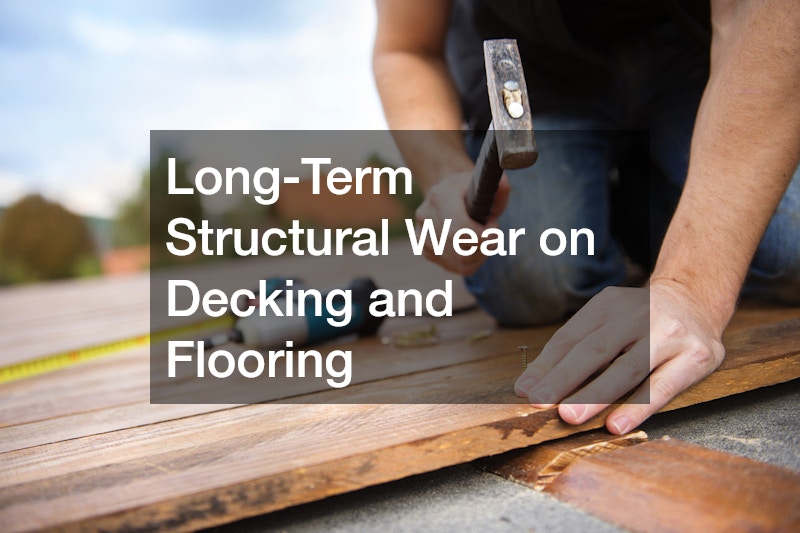
Beyond furniture and fixtures, the patio surface itself absorbs the brunt of summer-long sun exposure. Wood decking can gray, splinter, and lose structural integrity faster without regular sealing, while composite materials can soften or warp under repeated heat cycles. Even concrete and paver surfaces aren’t immune, since UV exposure combined with heat expansion can accelerate cracking along seams and joints over multiple seasons.
Catching this kind of wear early is far cheaper than replacing an entire surface. A simple seasonal inspection can flag small issues, like hairline cracks or fading sealant, before they become expensive structural repairs that require professional intervention.
- Inspect decking boards for graying, splintering, or soft spots at least twice a season
- Reseal wood surfaces annually if the patio gets more than a few hours of direct sun daily
- Check paver joints and grout lines for cracking after extended heat waves
- Watch for warping in composite decking near areas with the most consistent sun exposure
Ignoring your patio’s sun exposure all summer rarely feels like a decision in the moment, but the cumulative cost shows up in faded furniture, higher energy bills, and surfaces that wear out well before their time. The good news is that most of these problems are preventable with a bit of planning, whether that means choosing more durable materials, adding adjustable shade, or simply staying on top of seasonal maintenance. Take a walk around your patio this week and look honestly at what the sun has already done. Addressing even one or two of these issues now can save significant money and frustration before next summer arrives.